Southside Grove
Location
Installation Date: 2025
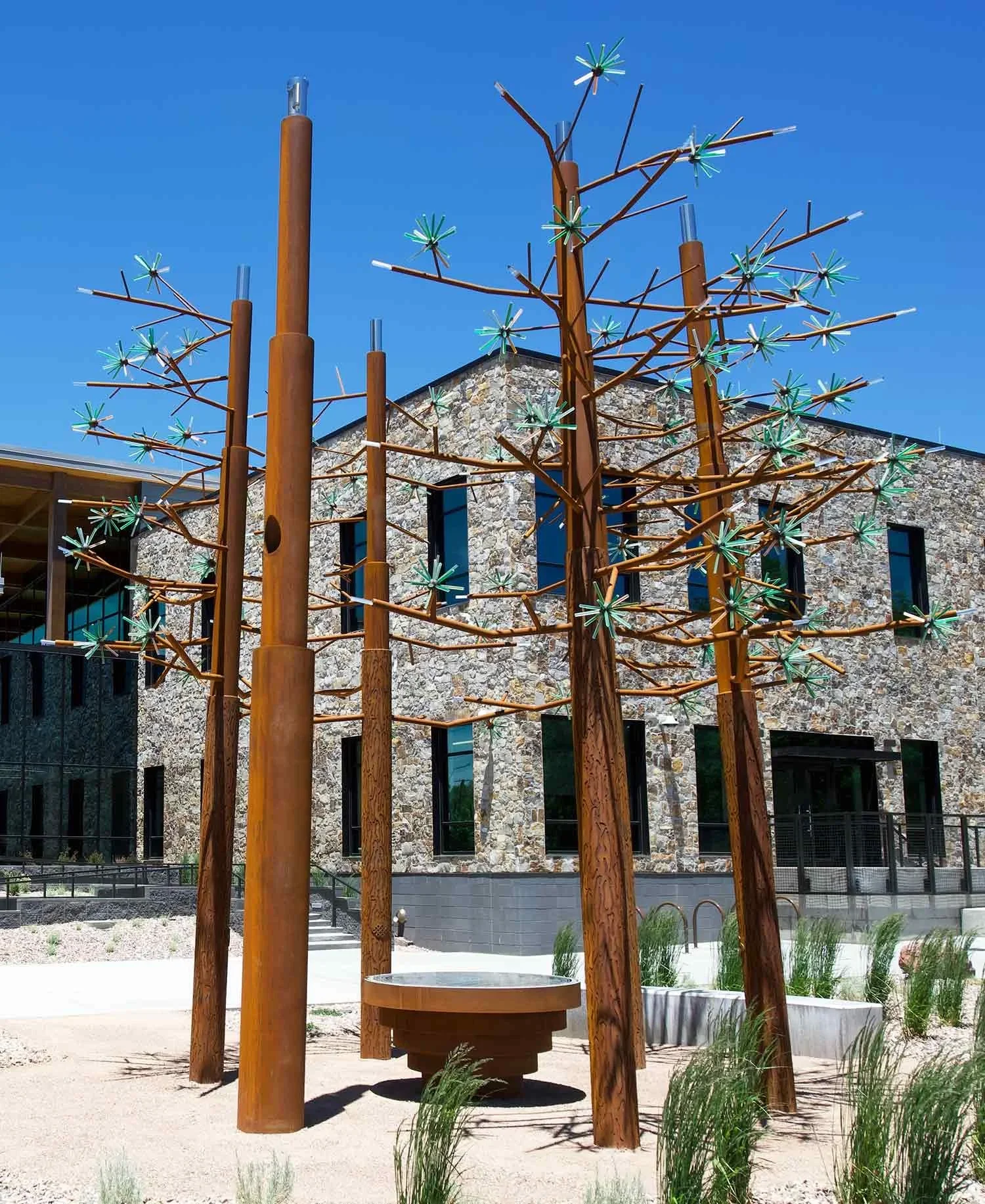
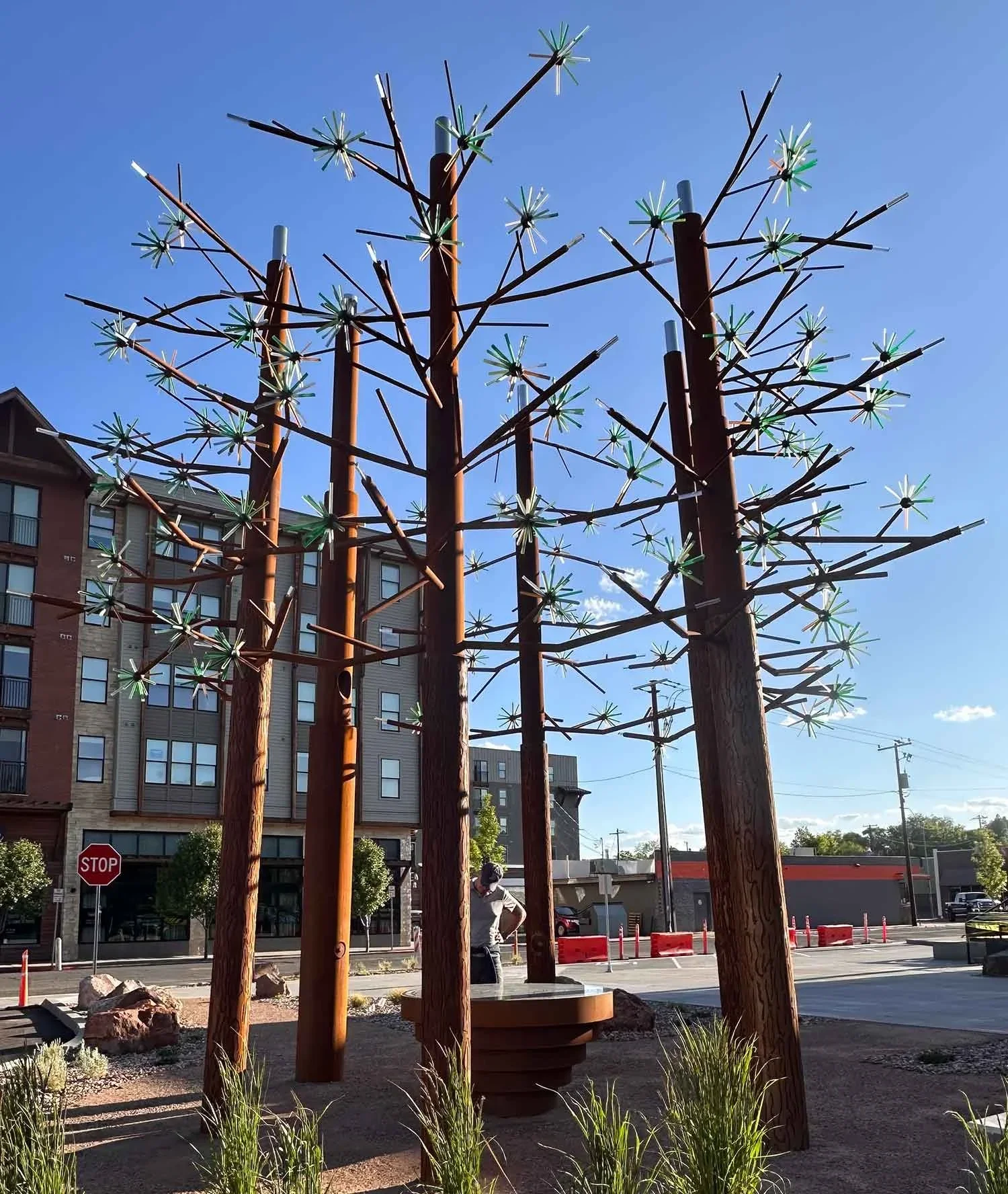
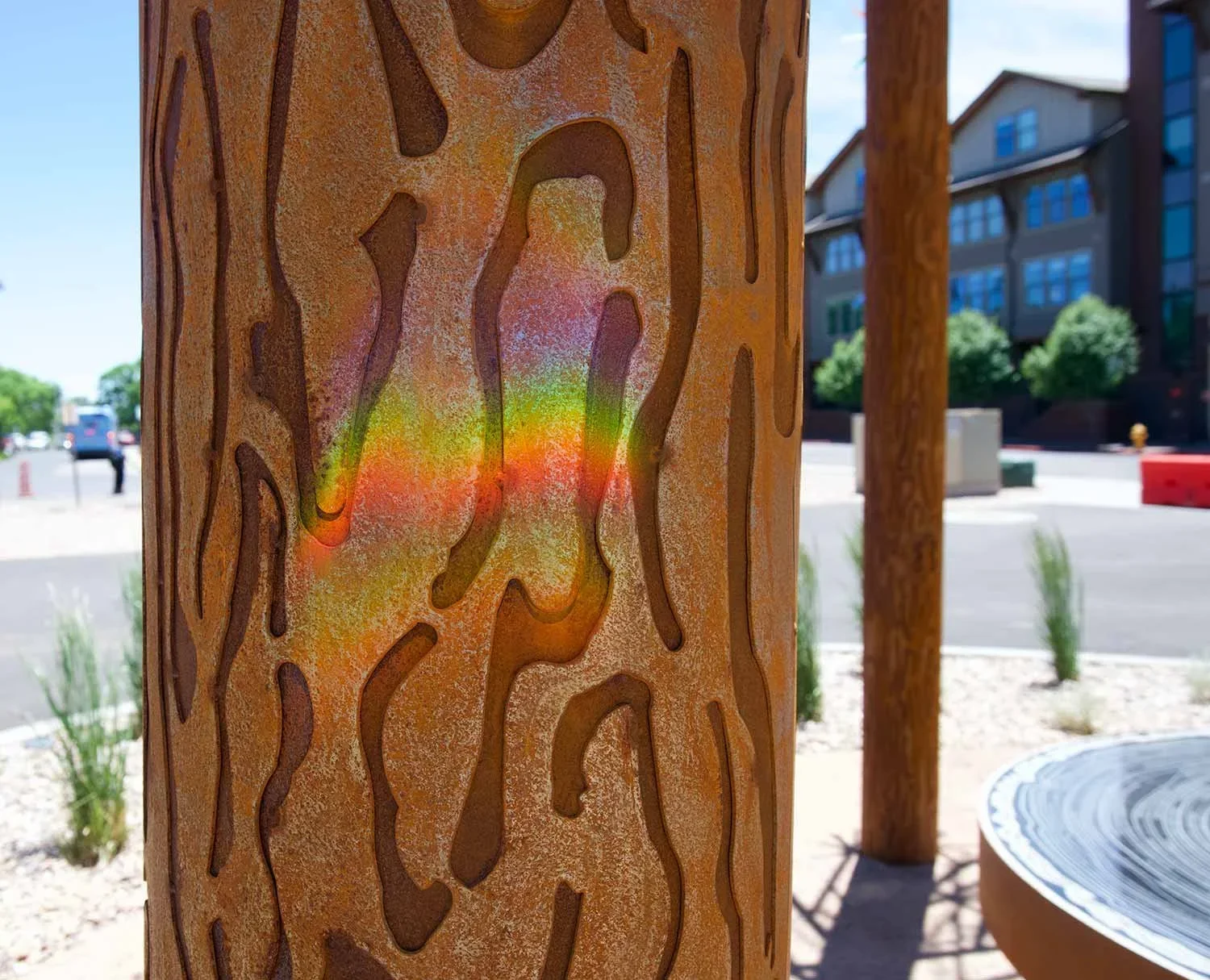
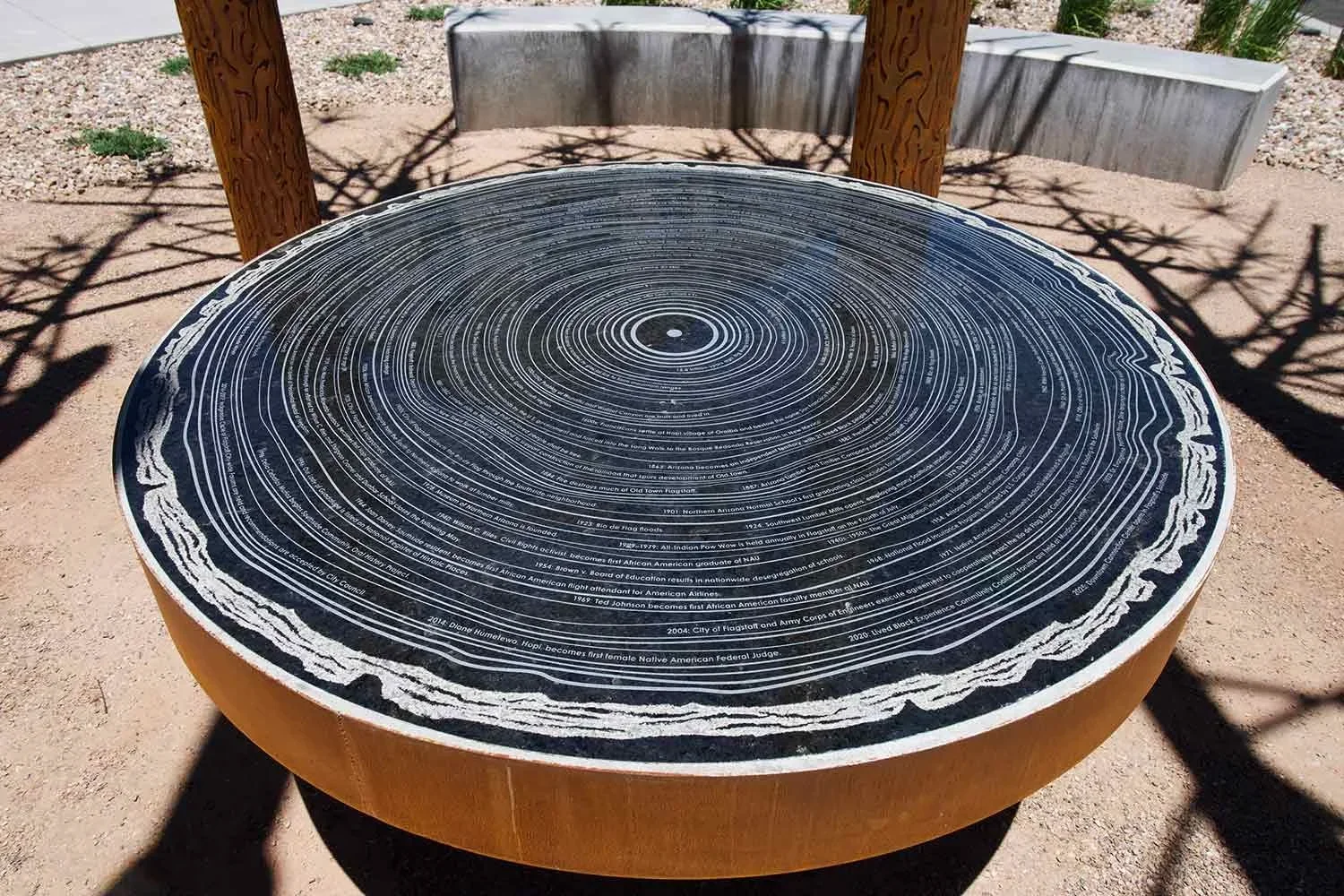
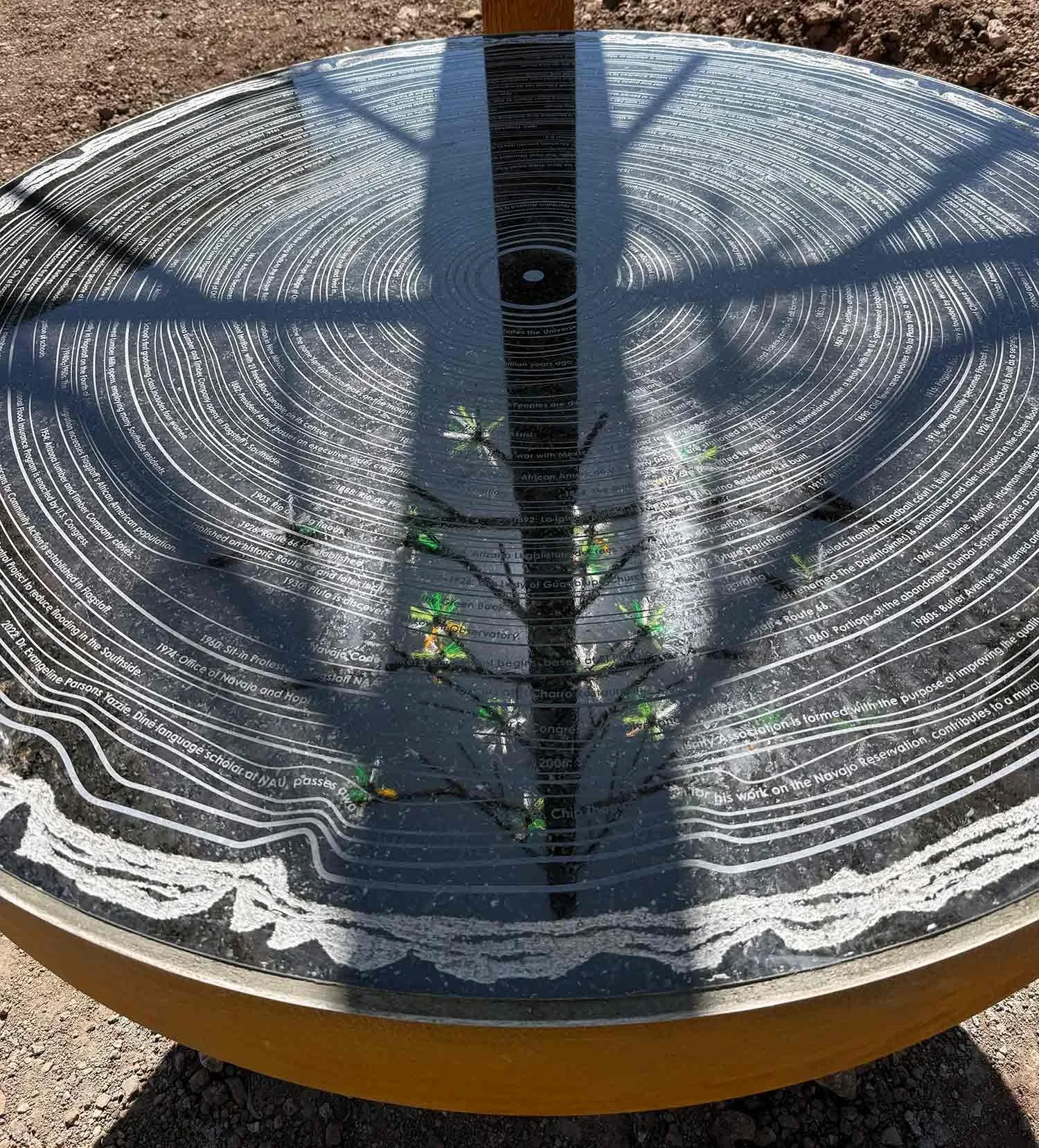
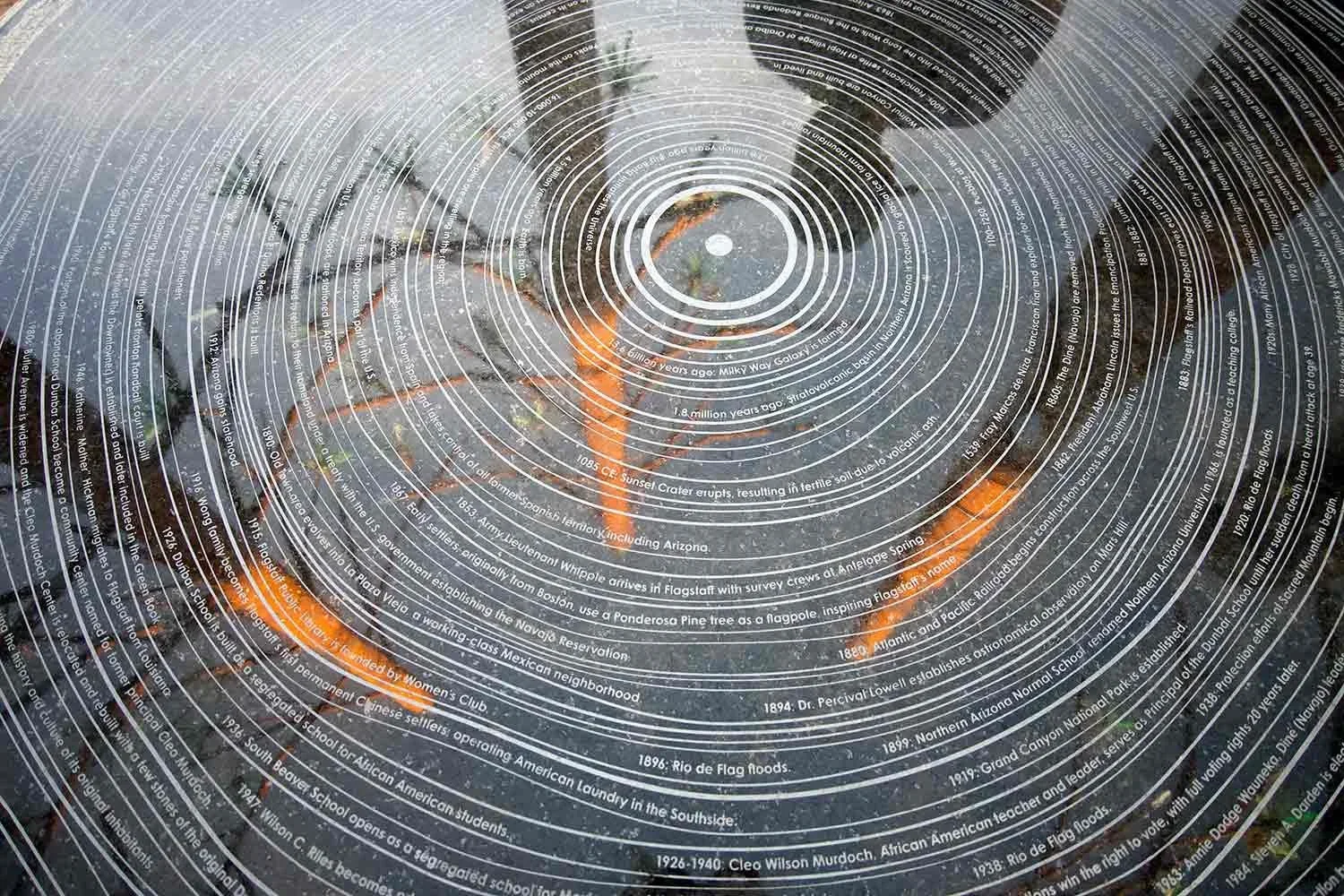
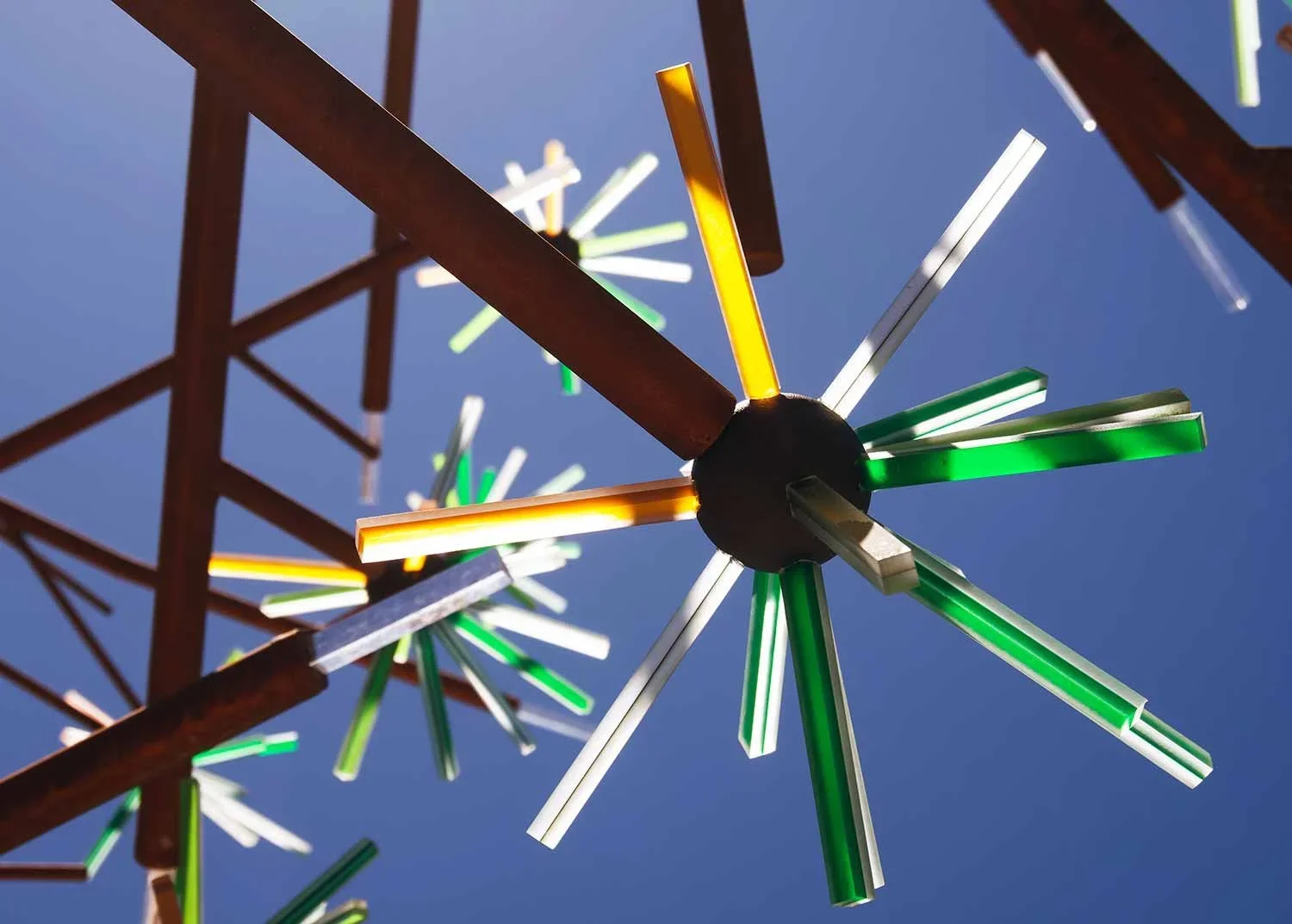
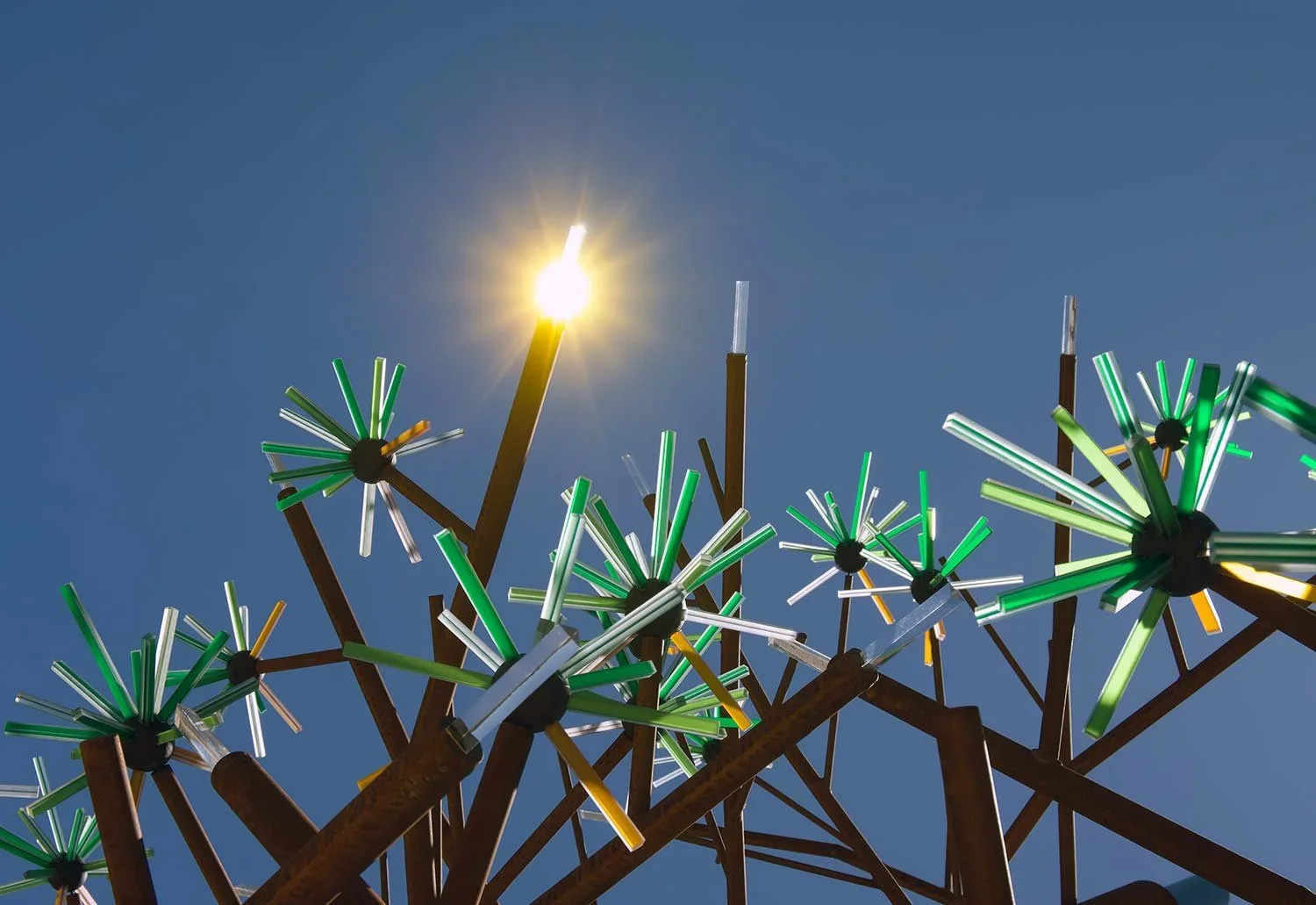
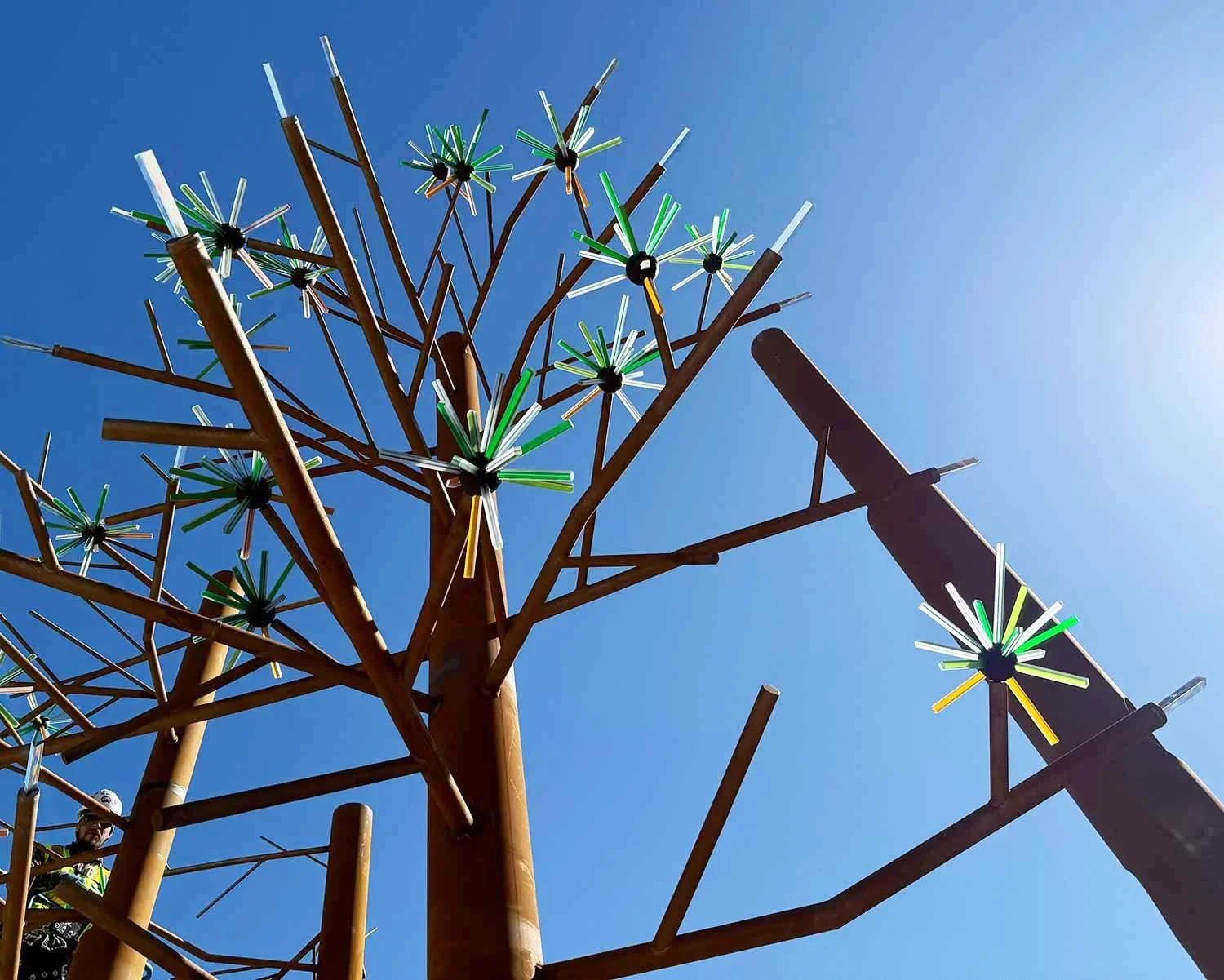
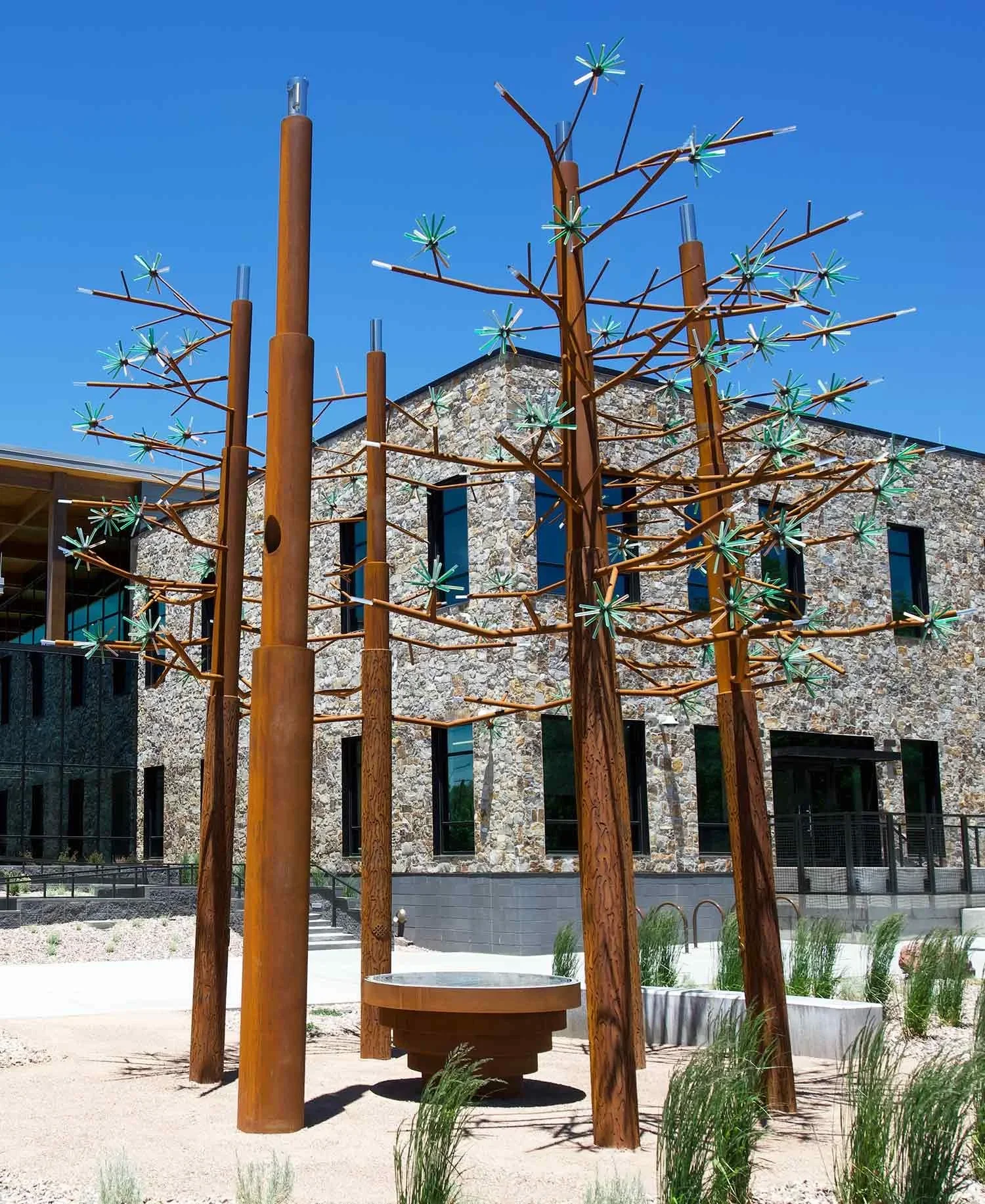
Southside Grove is a circular arrangement of sculptural weathering steel trunks inspired by both Ponderosa pine trees and telescopes. The trunks are aligned to celestial events. At the center of the grove is a granite “time table” carved with lines woven into the form of tree rings and words describing historic events significant to the Southside community where the artwork is located. At solar noon on the Equinoxes, a beam of sunlight casts through a hole in the southernmost trunk and onto the center of the table.
About the Artwork
About the Artist
The work of artist team Haddad|Drugan is an experimental inquiry into methods of manipulating environmental phenomena in the built environment. Haddad|Drugan specializes in conceptually driven public art that is often integrated into large-scale infrastructure projects.
Laura Haddad and Tom Drugan’s collaboration as an artist team began in 2001 and has fostered a wide range of innovative site-specific public art commissions and plans. Their Seattle-based studio, Haddad|Drugan LLC, operates at intersections of art, architecture, landscape, and theater. Laura Haddad has a Master’s degree in Landscape Architecture from University of California, Berkeley and a Bachelor’s degree in History from Bowdoin College. Her background also includes jewelry and stage set design. She has recently served as a member of the Seattle Design Commission and Seattle Public Art Advisory Committee. Tom Drugan received a Master’s degree in Landscape Architecture from Harvard University and a Bachelor’s degree in Architecture from the University of Colorado. His background includes sustainable building, filmmaking, and lighting.
Haddad and Drugan have taught at the Rhode Island School of Design and University of Washington and lectured in venues across the country. Their training in architecture and landscape architecture helps them to successfully translate art concepts to large scales, respond to contextual conditions, and integrate environmental processes into work that performs aesthetically, functionally, and ecologically. The artists’ award-winning work has been published in Sculpture, Architectural Record, Landscape Architecture, Eco-Structure, Landscape Journal, Land Forum, and other journals and books.
The Haddad|Drugan studio also includes collaborators Richard Desanto and Rhys Harrington, both of whom graduated from University of Washington with Master’s degrees in Landscape Architecture and who contribute their skills in design, modeling, drafting, and graphics to the artworks of Haddad Drugan.
Questions for Elementary School Families
What do you notice first when you look at this artwork?
The sculpture is inspired by Ponderosa pine trees and telescopes. Which one do they look more like to you? Why?
Why do you think the artist wanted to include something about the sky and space?
At solar noon on the Equinox, sunlight shines through a hole and lands on the table in the middle. What do you think it will look like when the sunlight hits the table?
The table in the center has carved tree rings showing important events from the local community. Why do you think the artist used tree rings to show history?
How can art help tell the story of a community?
How do you think the look of the artwork will change as it gets older?
What story do you think the artist is trying to tell through this artwork?
Questions for Secondary School Families
The artwork combines Ponderosa pines with telescopes. What might this combination suggest about Flagstaff’s history?
Why might the artist want viewers to think about time, science, and nature?
At solar noon on the equinoxes, light shines through a hole onto the granite table. What role do special moments like this play in public art?
How might experiencing this event change someone’s view of the piece?
How do tree rings help communicate the community’s history and growth?
How can public art acknowledge and celebrate a community’s past?
Do you think the meaning behind the artwork would change if it was built somewhere else?
How does experiencing art in the community feel different than seeing it in a gallery or museum?
How does this artwork encourage the community to reflect on their own history?
Extension Activity
Color or paint paper towel rolls to create tree trucks. Then, using construction paper, sticks, or straws cut and glue small “branches” onto the tops of the trunks. Next, create your own history tree stump! Use a paper plate and draw circles like big tree rings. In each ring, write or draw an important moment from your own life (first day of school, learning to ride a bike, a favorite memory) just like how Southside Grove uses tree rings to tell the community’s history. Finally, stand your tree trunks around your tree stump, like your own tiny version of the sculpture.