
Celebrating African Americans’ Contribution to the Growth and Development of Flagstaff
Location
Jetsonorama is the public art moniker of Chip Thomas, a photographer, activist, and former physician who worked on the Navajo Nation from 1987 to 2023. He is known for pasting large-scale black-and-white photographs of people onto buildings and structures to share their stories. After working as a family physician on the Navajo Nation for over three decades, Thomas transitioned to focus on his public art, which he sees as an extension of his healthcare work to create beauty and promote well-being. His art often addresses social justice issues, while also celebrating everyday life. In 2020, the United Nations selected him as one of a few artists to create work for the UN’s 75th anniversary, envisioning a more resilient and sustainable future.
About the Artist
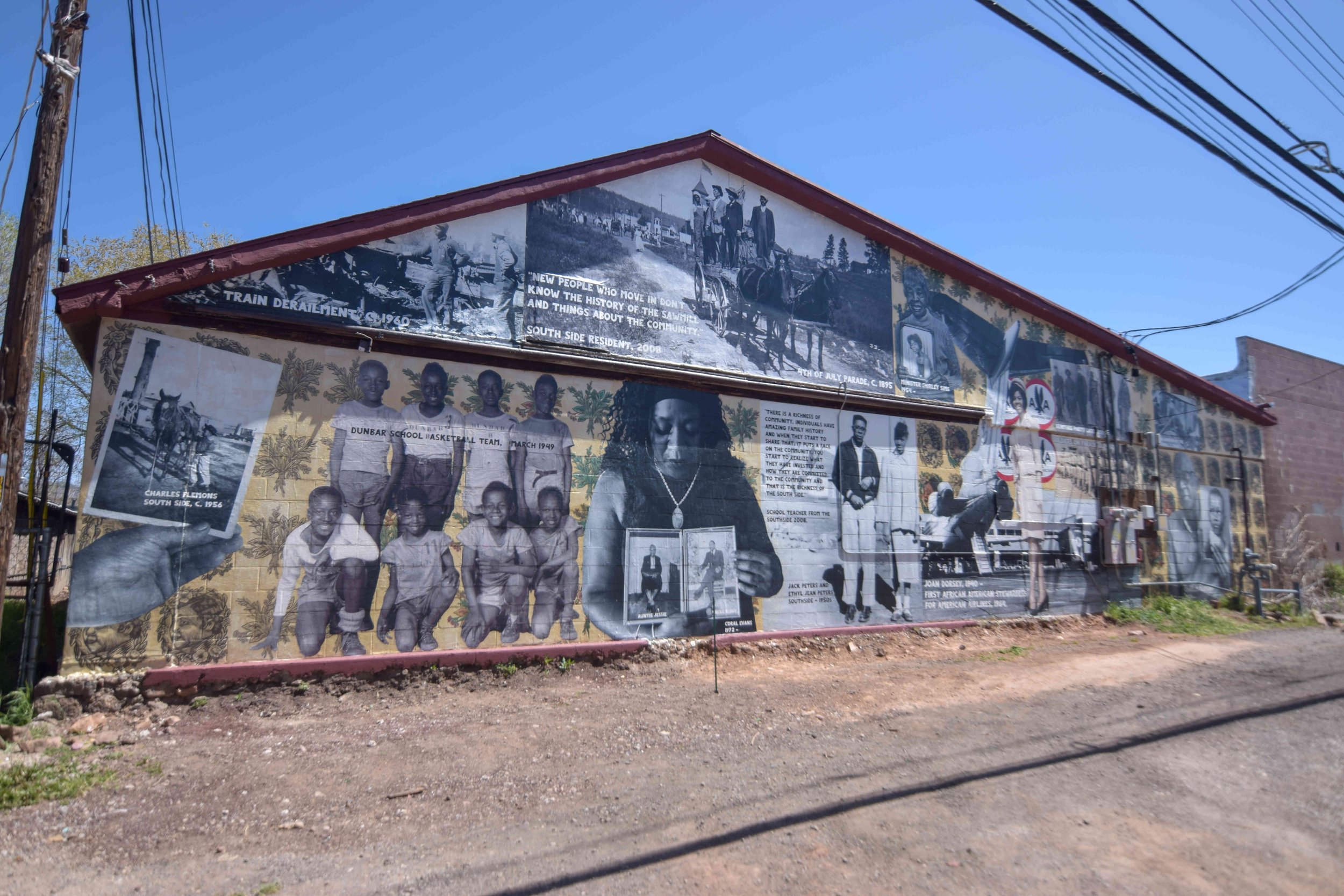
Last spring, community member Candace Ryan-Schmid, artist Chip Thomas (Jetsonorama), and collaborating artist Kill Joy received a Beautification in Action grant to create a large-scale mural that celebrates Flagstaff’s African American community and their contributions to our city’s growth and development. Comprised of a series of wheat-pasted photographs of noted individuals and families, the artwork is installed in a highly trafficked Southside alley located behind at 9 E. Cottage Avenue.
Over the last year, the team solicited more than $7,000 in additional contributions to meet their project budget and Thomas engaged in conversation with community members, learning more about the individuals and families of Flagstaff. This dialogue ultimately informed the mural’s imagery and serves “as a time machine, allowing the viewer a window into the past while honoring the present,” says Ryan-Schmid, the project’s organizer who spent more than two years bringing the mural to fruition. “As Flagstaff changes, it is important to not forget its roots and not let history be lost on us.”
About the Artwork
Connection to Nature: Though the piece is sited in an urban civic space, its visual language draws people back to the forests and trees that define much of Flagstaff’s identity. It encourages reflection on our relationship with natural environments.
Stillness and Presence: The vertical forms and harmonious spacing invite quiet contemplation. In passing through or beside the installation, viewers become part of the composition, subtly activated by the work.
Materials and Time: Because weathering steel changes over time, “Among Trees” will gradually evolve—its surfaces will develop deeper patinas, echoing the slow transformations of living forests.
Art in Civic Space: Positioned at the municipal court, this work helps soften the built environment, offering an artistic “breath” in everyday civic life.
Themes and Significance
Questions for Elementary School Families
What are some things that you notice when you first look at this mural?
Why do you think it’s important to remember people from the past? How does this mural help us do that?
Why do you think the artist chose to use these images?
What do you think the people in the pictures might be feeling or thinking?
How do the colors, patterns, and images in the mural make you feel?
This mural shows members of Flagstaff’s African American community throughout history. How can art help us learn about our town’s history?
If you could ask the artists one question about this mural, what would it be?
Questions for Secondary School Families
What do you notice first when you look at this mural? What parts stand out to you and why?
How does the artists’ use of photographs instead of painted portraits change how the artwork looks and feels?
What emotions or stories do you think the images in the mural are trying to communicate to the community?
How do the colors, textures, and placement of the images affect the overall message of the mural?
How can public art like this help a community, like Flagstaff, better understand its history?
Extension Activity
To extend, create your own mini mural showing people who make your community special. Your mural could include family, community members, teachers, or friends. Try using real photos to create your mural like these artists did. Paste them together and add in paintings or drawings to the background.