
Kulila
Location
S. Beaver and West Butler Street
Flagstaff, Arizona
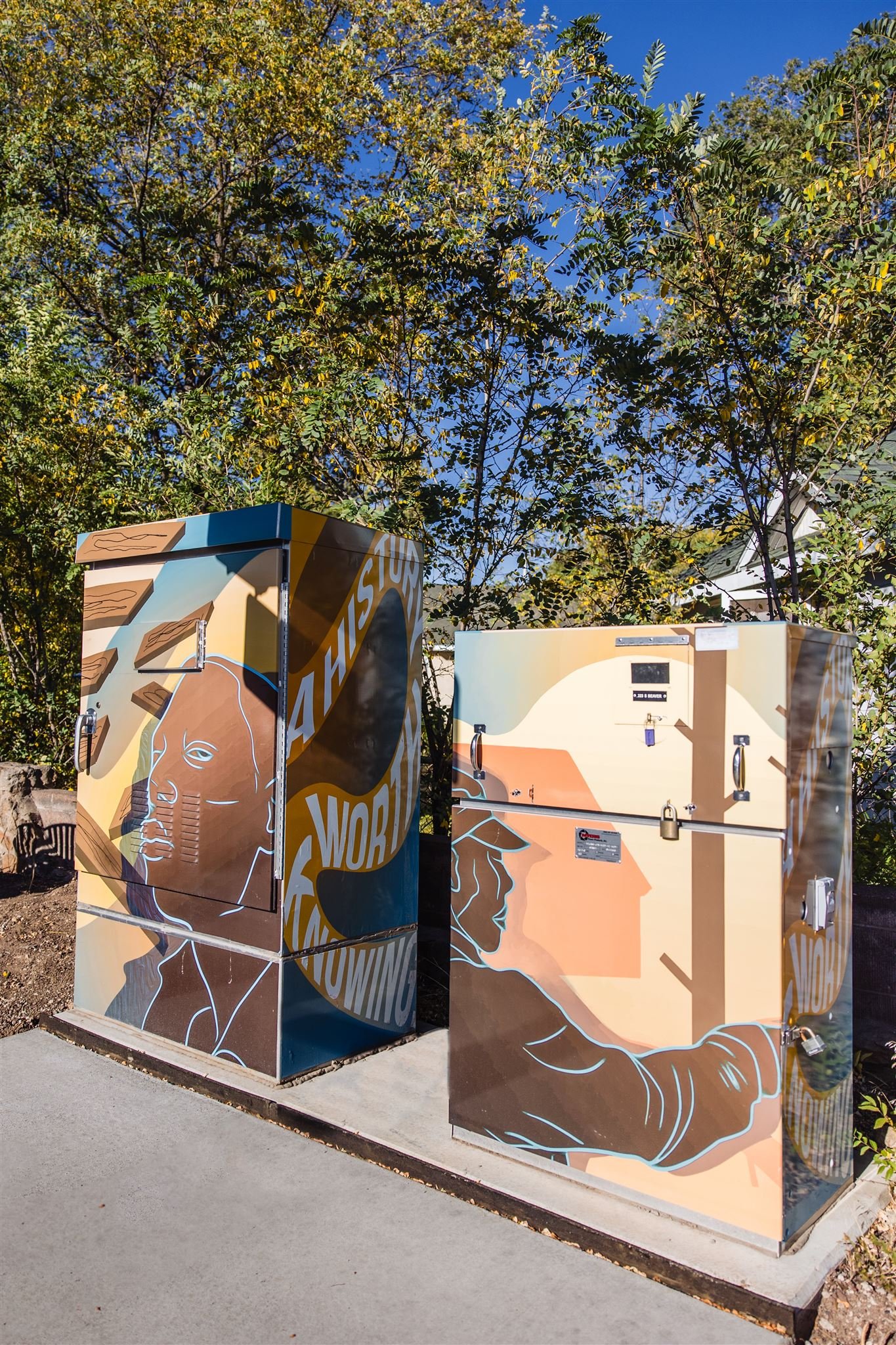
Created in 2022, Kulila is a public artwork inspired by the poem of the same name by Indigenous Australian poet Ali Cobby Eckermann. The poem emphasizes the importance of listening, remembering, and acknowledging difficult histories.
Kamberg interprets these ideas through images that honor Flagstaff's African American community. Featuring stylized representations of a Black lumberjack and mill worker, the artwork recognizes the important contributions of African Americans to Flagstaff's lumber industry and economic development. It reminds viewers that the city's history has been shaped by people from many backgrounds, including individuals whose stories have not always received the recognition they deserve.
About the Artwork
About the Artist
Themes and Significance
Dana Kamberg is an artist whose public artwork Kulila celebrates the history and contributions of Flagstaff's African American community. Through imagery inspired by historical experiences, Kamberg recognizes individuals whose labor helped shape the city's development. Her work invites viewers to reflect on the importance of remembering community histories and honoring people whose contributions have sometimes been overlooked.
The Poem Behind the Artwork
Dana Kamberg's Kulila was inspired by a poem of the same name by Ali Cobby Eckermann, an Indigenous Australian poet. The poem emphasizes the importance of listening, remembering, and preserving stories that might otherwise be forgotten. Kamberg brings these ideas to Flagstaff by honoring African Americans whose labor and contributions helped shape our community.
Listen to the poem by clicking HERE.
Remembering History: Kulila encourages viewers to acknowledge the people and experiences that shaped Flagstaff, including stories that may be missing from traditional historical accounts.
African American Contributions: By depicting workers in the lumber industry, the artwork recognizes the role African Americans played in building Flagstaff's economy and community.
Listening and Understanding: Inspired by Eckermann's poem, the artwork suggests that understanding history requires listening to the experiences and perspectives of others.
Community Identity and Belonging: Kulila celebrates the diversity of Flagstaff's history and reinforces the importance of recognizing everyone's contributions to a shared sense of place.
Art as Historical Storytelling: Through public art, Kamberg transforms an everyday urban setting into an opportunity to learn about local history, reflect on social justice, and consider whose stories are remembered.
Questions for Elementary School Families
This page is a work in progress, more coming soon!
Questions for Secondary School Families
This page is a work in progress, more coming soon!
Extension Activity
This page is a work in progress, more coming soon!